
简介
C++的STL有六大组件:仿函数, 空间配置器, 算法, 容器, 迭代器,配接器。list属于容器的一种。
list的设计使用了模板,是一种泛型编程。
初识list
模型
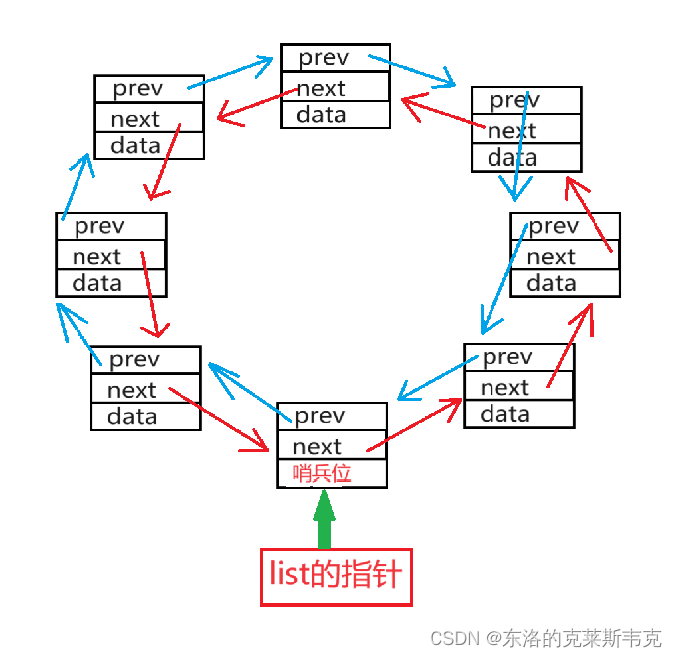
list是带哨兵位的双向循环链表。
链表是由一个一个的节点通过指针链接起来的。list的节点设计:prev指针指向前一个节点,next指针指向下一个节点,data储存数据。如下图

而list想要实现双向循环链表,只需用一个指针指向不储存数据的节点——哨兵位节点或头节点。让哨兵位节点将整条链表首尾相连。哨兵位的next是链表的头节点,哨兵位的prev是链表的尾节点,如下图
list容器的优缺点
优点:**头部插入,头部删除,尾部插入,尾部删除的时间复杂度位O(1)**。list的指针是一直指向哨兵位节点的,通过哨兵位节点能找到链表的头节点和尾节点,从而实现头插,头删,尾插,尾删操作。
缺点:对链表中的数据进行排序的时间复杂度会很高。找链表中的某一个数据时,需要遍历链表。
list的迭代器
list的每个节点在内存中储存不是连续的。
普通的指针不能完成对链表的遍历——加加指针不能使指针指向下一个节点,减减指针不能使指针指向上一个节点。指针的解引用不能完成对数据存取——普通指针解引用是整个节点,而不是节点里存的数据。
所以不能用普通指针做list的迭代器。应该对普通指针进行封装,将封装之后的普通指针作为list的迭代器。该迭代器能完成链表的遍历,数据的存取等操作。
具体怎样封装,下面介绍源代码思路和模拟实现时会详细讲解
迭代器失效:把迭代器指向的节点删除掉,会让该迭代器失效,类似于野指针的问题。在迭代器指向节点的前面或后面插入节点,不会使迭代器失效。
常用接口介绍
获取迭代器
begin

返回哨兵位前一个节点的位置
end

返回哨兵位节点的位置
empty

检测list是否为空,是返回true,否则返回false
size

返回list中有效节点的个数
front

返回list的第一个节点中值的引用
back

返回list的最后一个节点中值的引用
insert

在list的 position 迭代器指向的节点之前插入值为val的节点,返回新插入节点的迭代器
push_front

在链表的头部插入一个值为val的节点
pop_front

删除头部位置的节点
erase

删除position迭代器指向的节点,或删除从first到last迭代器区间的节点,返回下一个位置的迭代器
push_back

在链表的尾部插入值为val的节点
pop_back

删除最后一个节点
clear

删除所有有效节点
源代码思路
下面内容参考侯捷老师的《STL源码剖析》
源代码中涉及空间配置器的部分不做重点讲解,只需知道空间配置器是为了给节点list申请空间的即可。
小编摘抄部分源码,带大家了解list设计的大概框架。具体实现的细节在模拟实现时讲解
节点设计
template <class T>
struct __list_node
{
    typedef void* void_pointer;
    void_pointer* prev;
    void_pointer* next;
    T data;

}
struct在C语言中是结构体,在C++中是类。用struct封装不加访问限定符默认成员是公有的。迭代器和链表需要访问节点的数据,设计成共有是为了方便访问。设计成私有需要声明友元。
prev和next的指针是void类型是因为不知道数据的类型,源码在实现其他接口时会把void进行强转。和下面代码的设计是等价的
__list_node<T> prev;* ** __list_node<T>* next;**
data是用来储存数据的
迭代器的设计
template <class T, class Ref, class Ptr>
struct __list_iterator
{
    typedef __list_iterator<T, T&, T*> iterator;
    typedef __list_iterator<T, Ref, Ptr> self;

    typedef T value_type;

    typedef Ptr pointer;
    typedef Ref reference;

    typedef __list_node<T>* link_type;
    link_type node; //节点指针  核心数据

//运算符重载,为了让node能像普通指针一样

    //解引用重载
    reference operator*()const //Ref
    {
        return (*node).data;
    }
    //->运算符重载
    pointer operator->() const  //Ptr
    {
        return &(operator*());
    }
    //++运算符重载.....

    //--运算符重载....

    //==运算符重载....

    //......
}
成员全部共有,方便list访问
Ref和Ptr两个模板参数是为了区分普通迭代器和const迭代器,如下代码
typedef __list_iterator<T, T&, T*>  iterator;   //迭代器别名
typedef __list_iterator<T, const T&, const T*>  const_iterator; //const迭代器别名
如下图
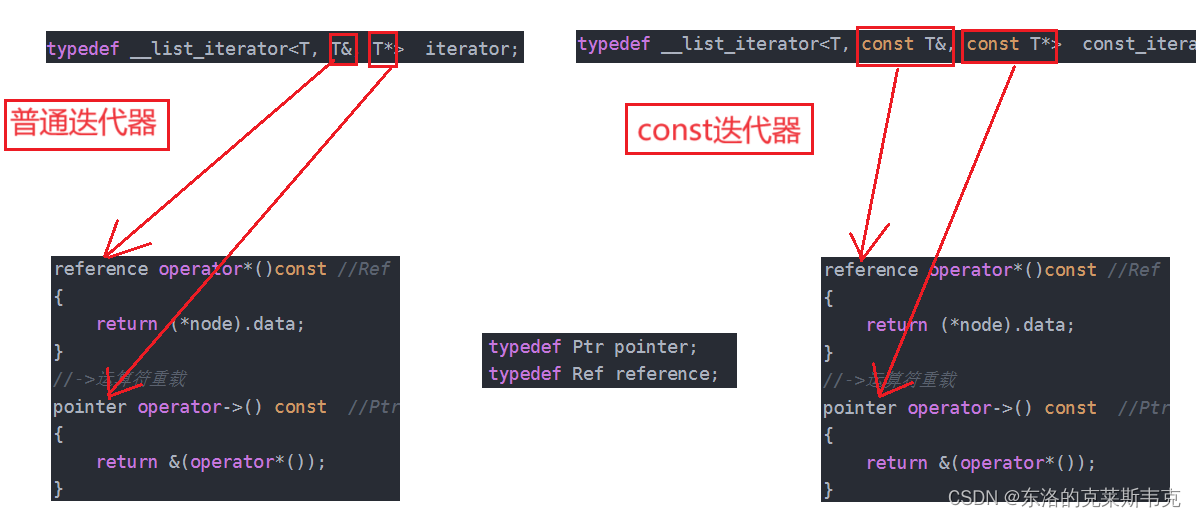
node是节点的指针,是核心数据。在迭代器这个类中,重载了*** -> ++ -- == != **运算符是为了让结点指针能像普通指针一样,完成对链表的遍历和对数据的存取。这便是封装的魅力。
list的设计
template <class T, class Alloc = alloc>
class list
{
protected:
    typedef __list_node<T> list_node;

public:
    typedef list_node* link_type;

protected:
    link_type node;
}
上文已经提到,只需用一个节点指针node指向哨兵位节点,便可以通过迭代器对整条链表增删查改。
begin()
iterator begin()
{
return (link_type)((*node).next);
}
获取哨兵位节点的下一个指针next,但next是void*类型的指针,需要强转成节点类型的指针
end()
iterator end()
{
return node;
}
获取尾节点的下一个节点的指针——哨兵位****节点指针
空构造
void empty_initialize()
{

node = get_node(); //为哨兵位开空间

node->next = node; //没有有效节点,首尾指针都指向自己

node->prev = node;

}

list()//构造函数,构造空链表
{
empty_initialize();

}
list是允许构造空链表的
详解构造函数:http://t.csdnimg.cn/Iu0t4
insert()
iterator insert (iterator position, const T& x)
{

link_type tmp = create_node(x);

tmp->next = position.node;
tmp->prev =  position.node->prev;
(link_type(position.node->prev))->net = tmp;
position.node->prev = tmp;

return tmp;

}
上述代码中有经过封装的函数。但大致思路如下图
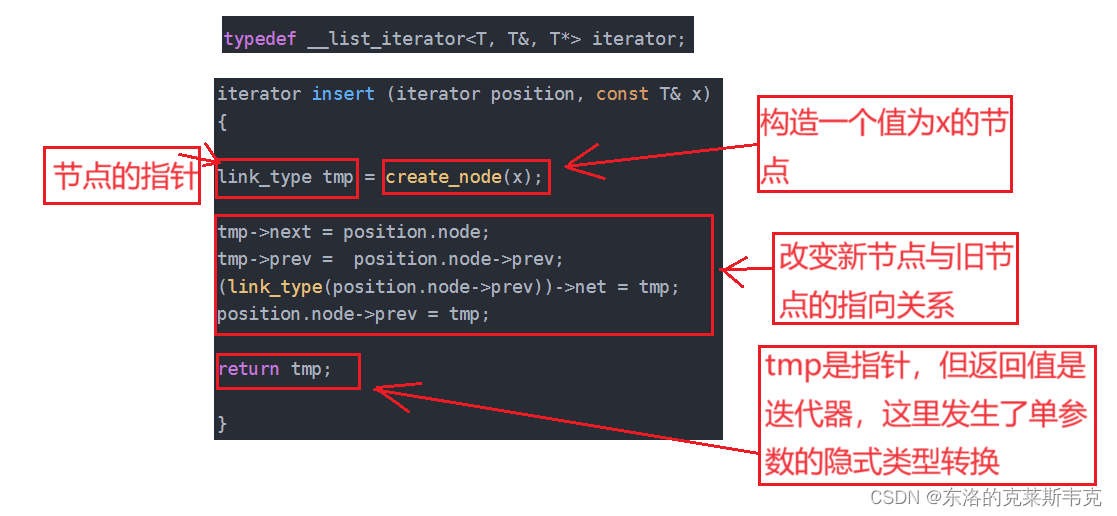
隐式类型转换:http://t.csdnimg.cn/jBT7I
push_back
void push_back(const T& x)
{
insert(end(), x);

}
复用insert
模拟实现
目的:源代码的变量经过了嵌套的typedef,函数经过层层封装。用源代码理解list的实现细节和运行机制并不容易。用源代码的的框架和实现思路实现一个简易的list,帮助我们更好的理解list。
模拟实现是用new和delete,管理list的内存。详见内存管理一文:http://t.csdnimg.cn/byO3P
节点设计
template <class T>
struct __list_node
{
    T* prev;//指向前一个节点
    T* next;//指向后一个节点
    T data;//储存数据

    __list_node(const T& val = T()) //构造函数
        :prev(nullptr)
        , next(nullptr)  //参数列表
        , data(val)
    {

    }
};
迭代器设计
template <class T, class Ref, class Ptr>  //封装指针
struct __list_iterator
{

    typedef __list_iterator<T, Ref, Ptr>  self;   //迭代器别名

    typedef __list_node<T>  list_node; //节点别名别名

    list_node* p_node;   //节点指针

    __list_iterator(list_node* val)
        :p_node(val)
    {

    };

    T operator*()//解引用重载
    {
        return  p_node->data;
    };

    Ref operator*()//解引用重载
    {
        return  p_node->data;
    };

    T operator->()
    {
        return &p_node->data;
    }
    Ptr operator->()
    {
        return &p_node->data;
    }

    self& operator++()//加加运算符重载
    {
        return p_node->next;
    };

    bool operator!=(const self val)//不等于运算符重载
    {
        return p_node != val.p_node;
    };

    bool operator==(const self val)//等于运算符重载
    {
        return p_node == val.p_node;
    };

};
list设计
框架
template <class T>
class list
{
    typedef __list_node<T>  list_node; //节点指针别名
    typedef __list_iterator<T, T&, T*>  iterator;   //迭代器别名
    typedef __list_iterator<T, const T&, const T*>  const_iterator;   //const迭代器别名


public:

//接口......

private:
    list_node* head_node;//头节点,只要一个指针便可代表整个链表

};
获取迭代器
iterator begin()
{
    return head_node->next;
 }
const_iterator begin()
{
    return head_node->next;
}

iterator end()
{
    return head_node;
}

const_iterator end()
{
    return head_node;
}
空构造
void empty_init()
{
    head_node = new list_node;
    head_node->_prev = head_node;
    head_node->_next = head_node;

}
list()
{
    empty_init();
}
insert
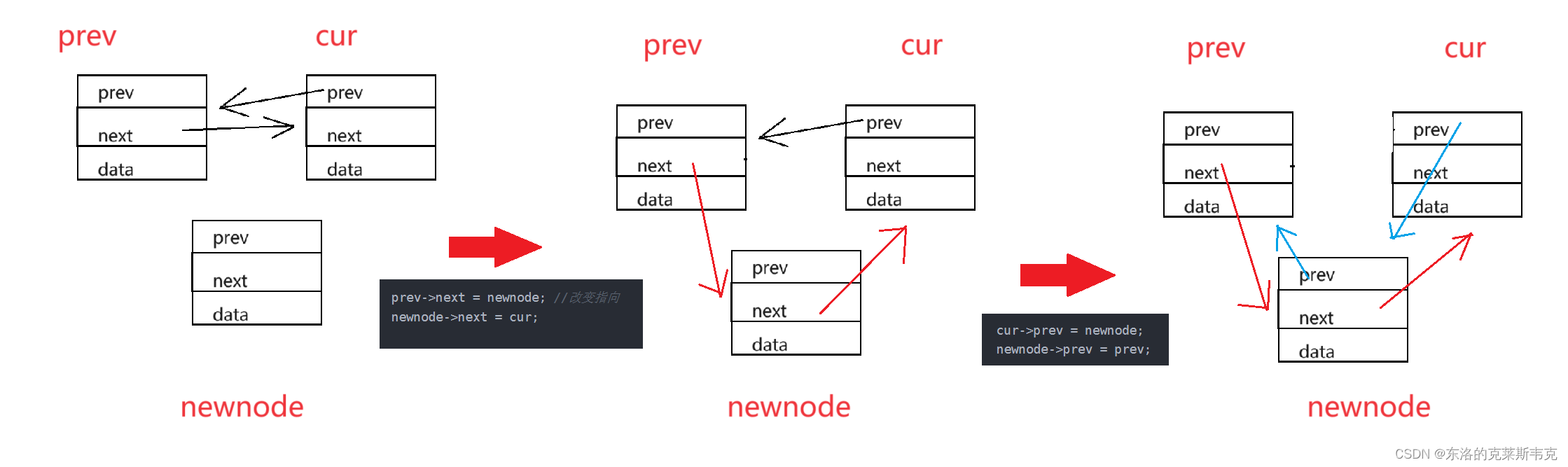
iterator insert(iterator pos, const T& x)//指定位置插入
{
    list_node* cur = pos.p_node;  //用临时指针指向迭代器位置的节点
    list_node* prev = cur->prev; //用临时指针指向该节点的下一个节点

    list_node* newnode = new list_node(x); //构造新节点

    prev->next = newnode; //改变指向
    newnode->next = cur;

    cur->prev = newnode;
    newnode->prev = prev;

    return newnode; //返回新节点的迭代器
}
代码思路如下图
erase
iterator erase(iterator pos)//指定位置删除
{
    assert(pos != end());  //不能删哨兵位

    list_node* cur = pos.p_node; //用临时指针指向前中后三个节点
    list_node* prev = cur->prev;
    list_node* next = cur->next;

    prev->next = next; //改变指向
    next->prev = prev;

    delete cur;//删除该节点

    return next; //返回下一个位置的节点的迭代器

}
赋值重载
现在写法
void swap(list<T>& lt)
{
    std::swap(head_node, lt.head_node);
}

list<T>& operator=(list<T> lt)
{
    swap(lt);

    return *this;
}
其他接口
void push_back(const T& x)
{
    insert(end(), x);
}

void push_front(const T& x)
{
    insert(begin(), x);
}

void pop_back()
{
    erase(--end());
}

void pop_front()
{
    erase(begin());
}
本篇内容到此结束啦
版权归原作者 东洛的克莱斯韦克 所有, 如有侵权,请联系我们删除。