
** 🌈个人主页:**秦jh_-CSDN博客
🔥 系列专栏:https://blog.csdn.net/qinjh_/category_12575764.html?spm=1001.2014.3001.5482

前言
💬 hello! 各位铁子们大家好哇。
** 今日更新了list的相关内容**
🎉 欢迎大家关注🔍点赞👍收藏⭐️留言📝
** list的底层是双向链表结构,双向链表中每个元素存储在互不相关的独立节点中,在节点中通过指针指向其前一个元素和后一个元素。**
list的常见接口
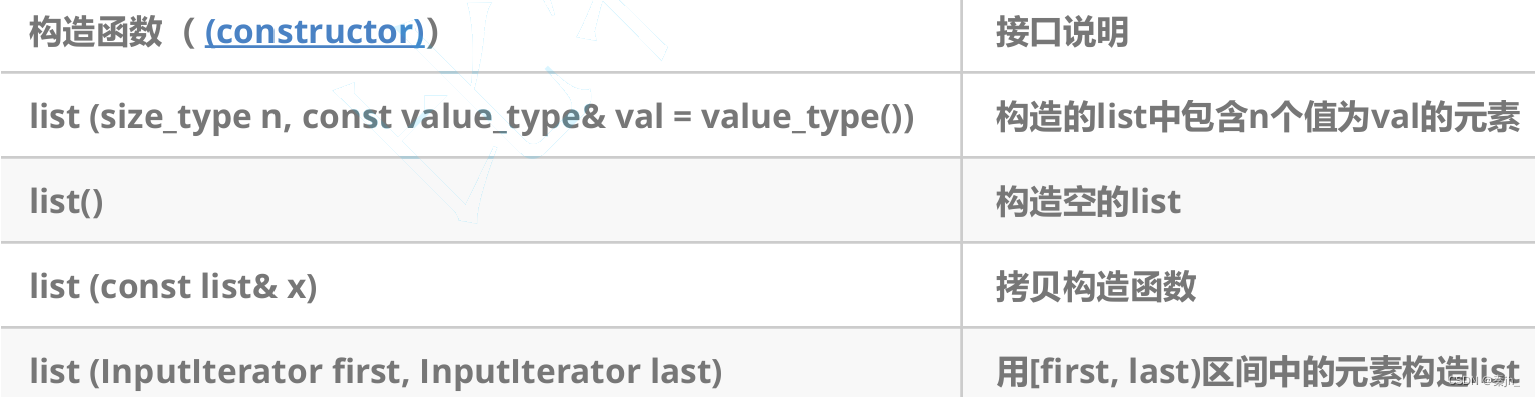
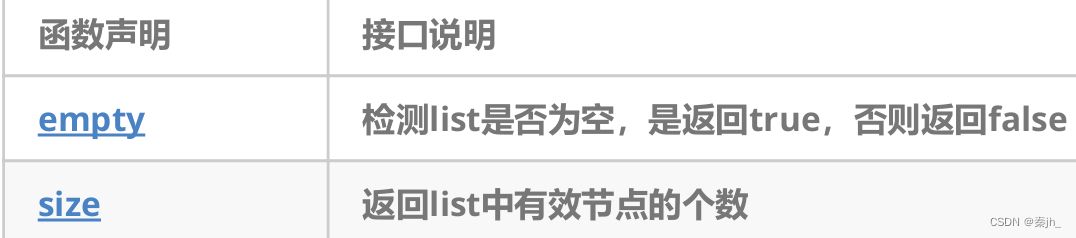

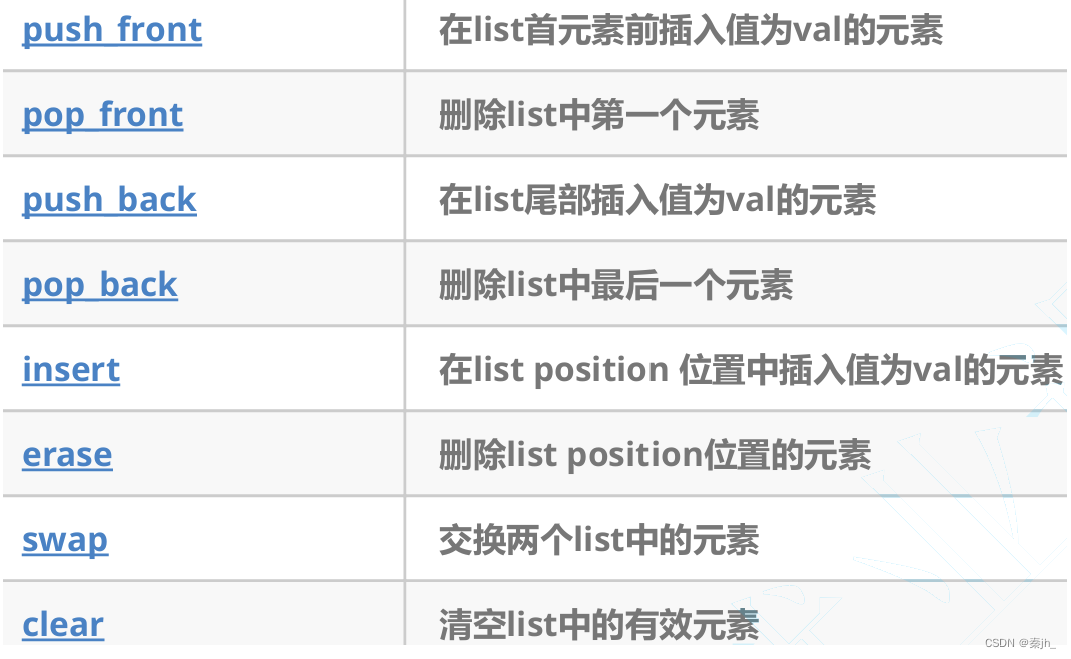

对迭代器的封装
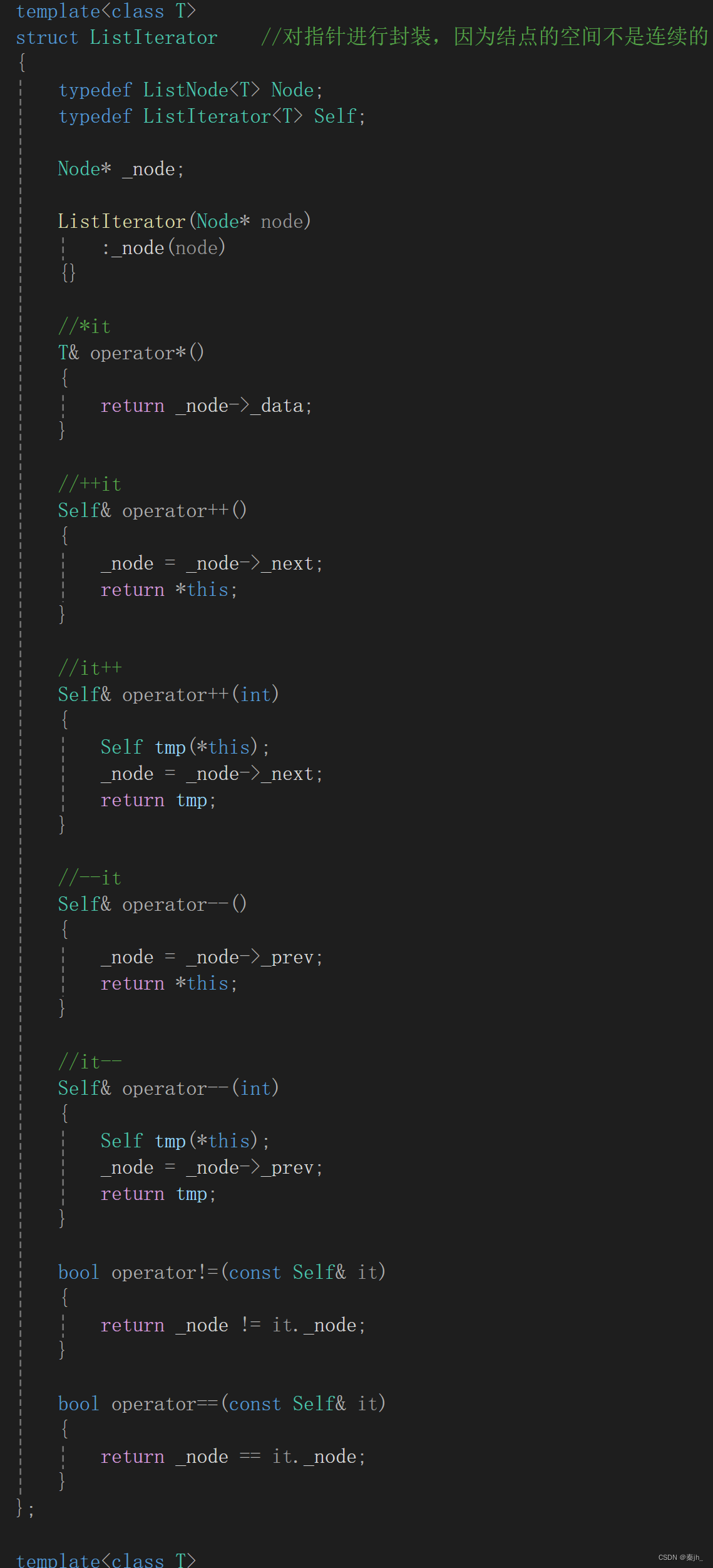
因为list的空间不是连续的,不能用原生指针,必须对其进行封装。
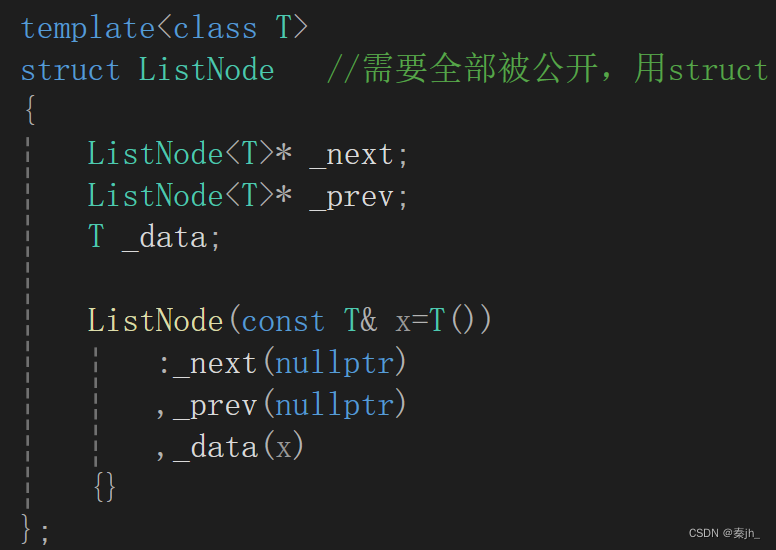
节点
重载->
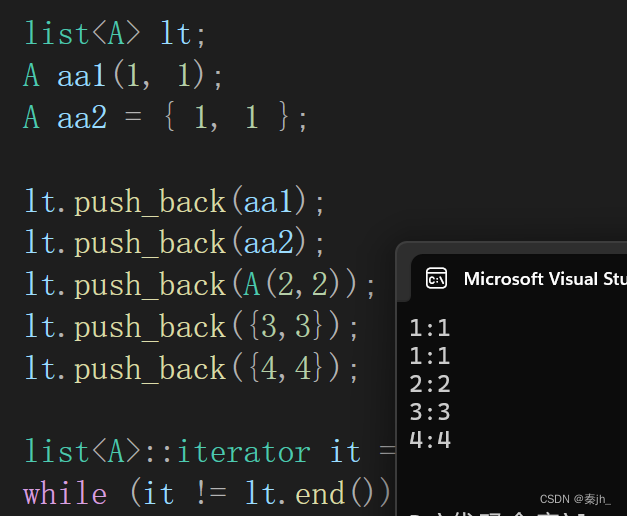
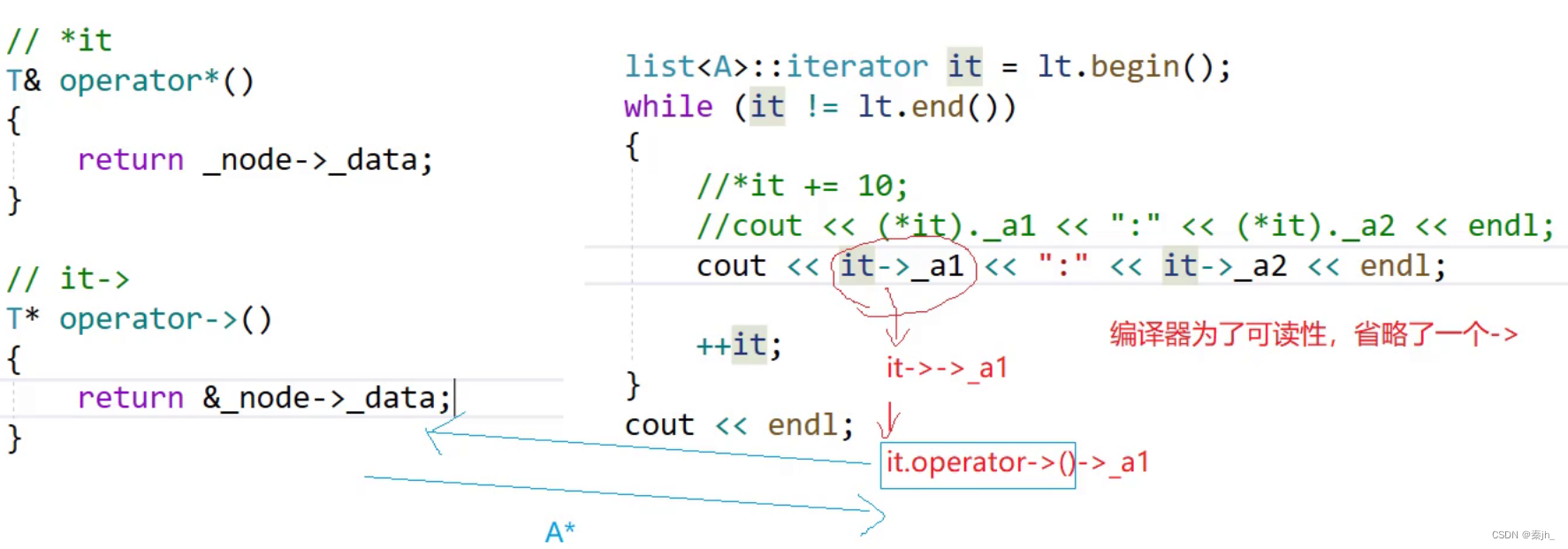
当数据是自定义类型时,想通过->访问,就必须重载。
const迭代器
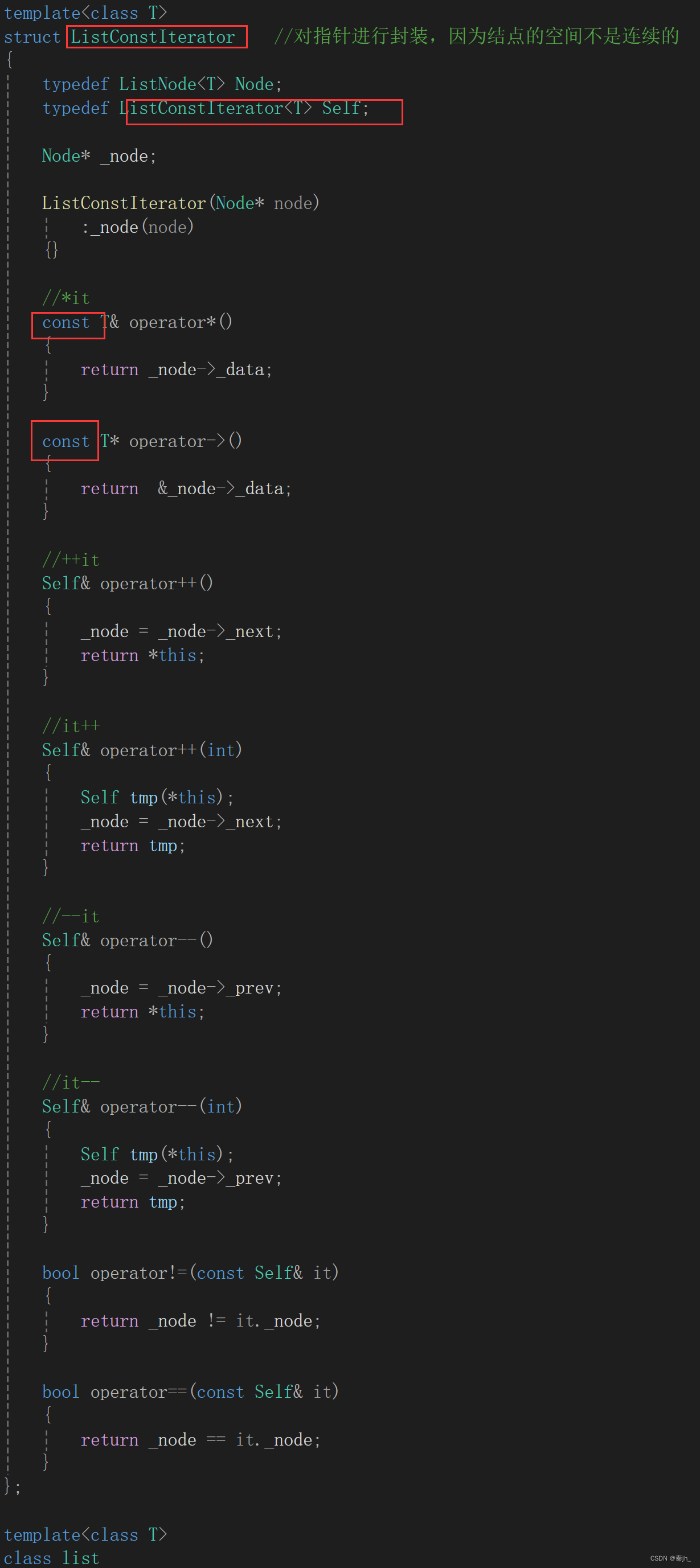
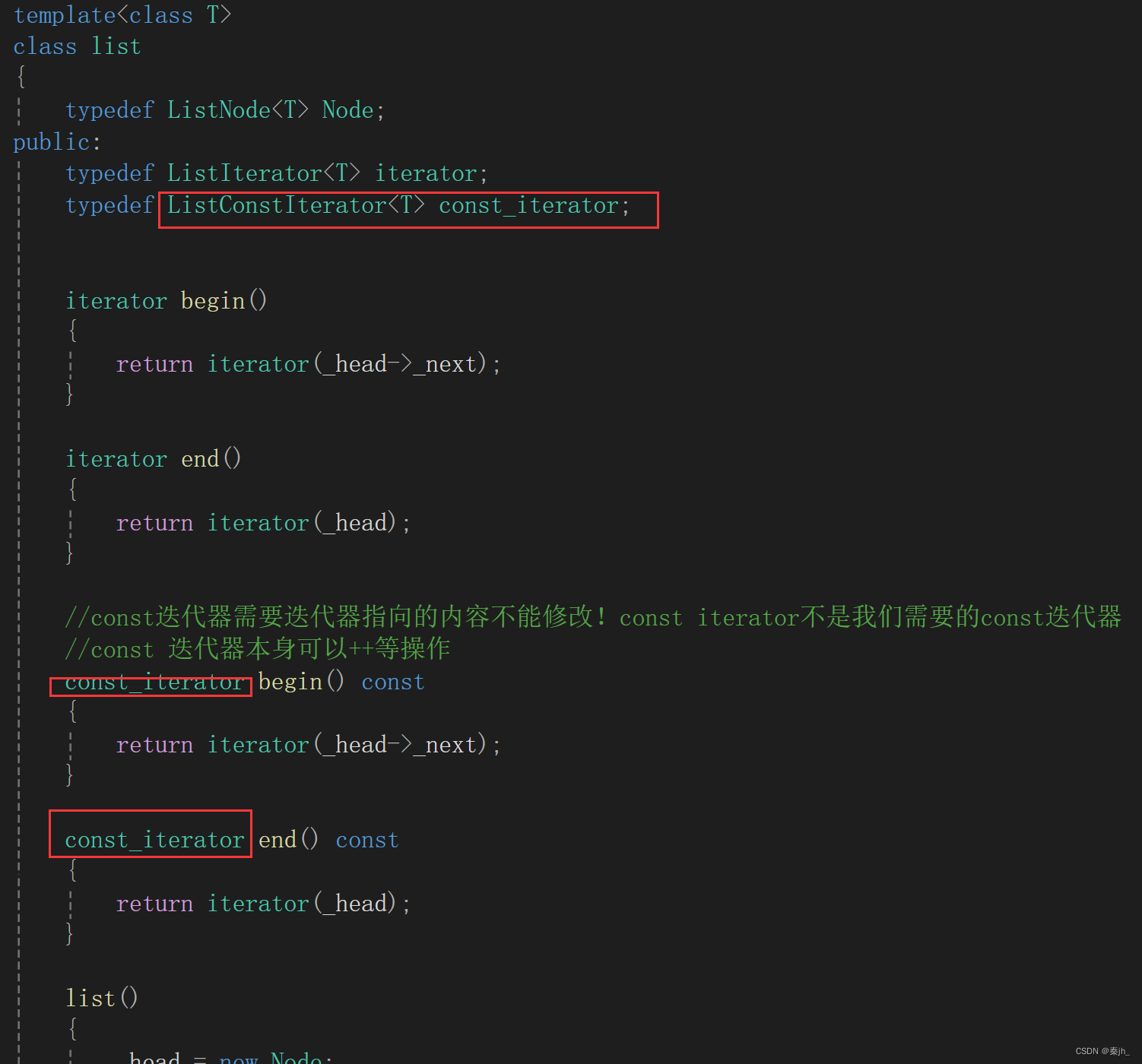
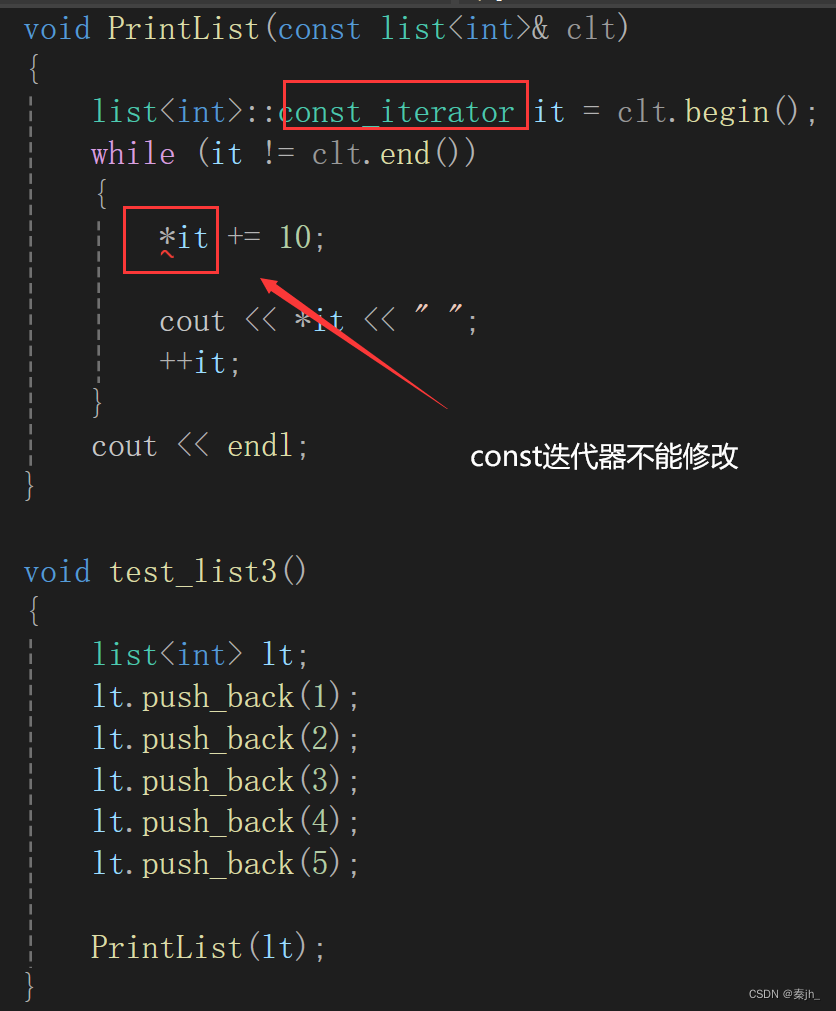
用const迭代器,需要重新弄一个类,而const迭代器跟普通迭代器基本一样,只修改了部分,如果为此就重新弄一个类,代码就太冗余了。
下面是进行的优化:
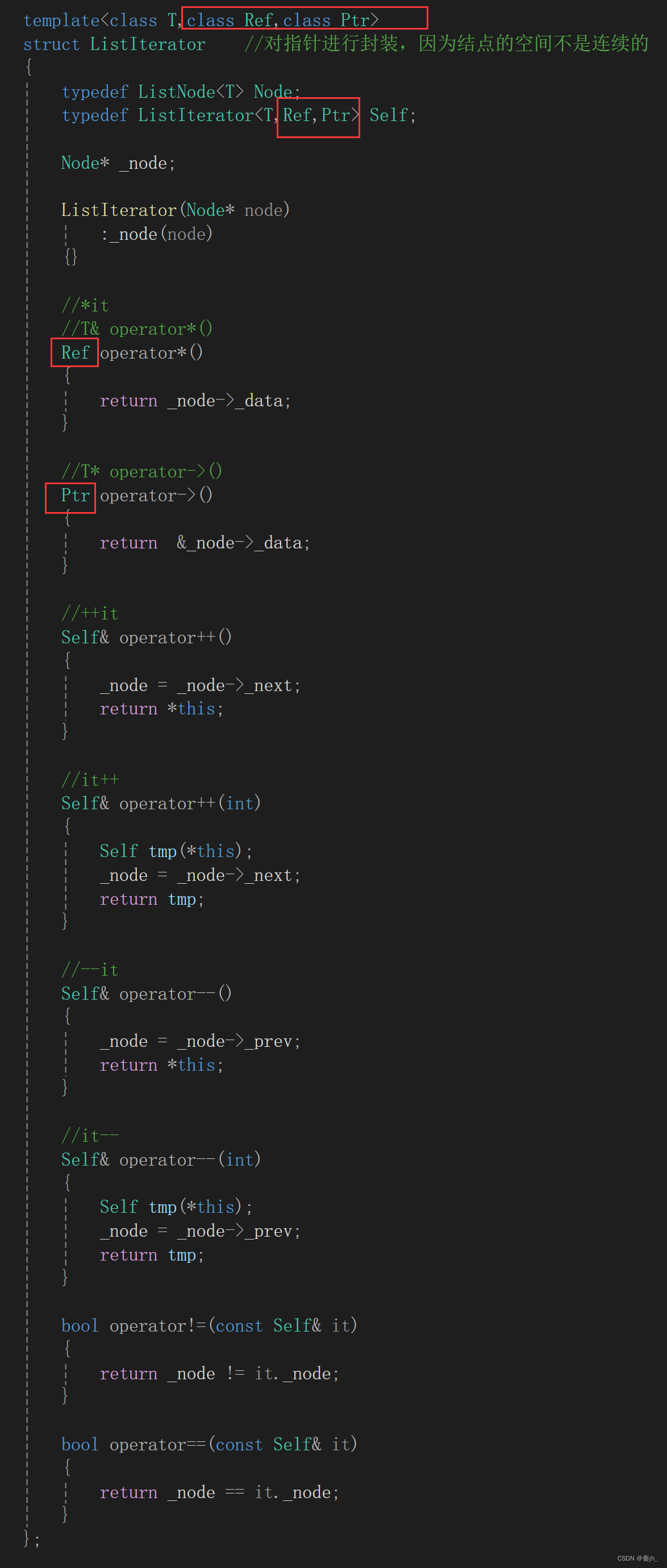
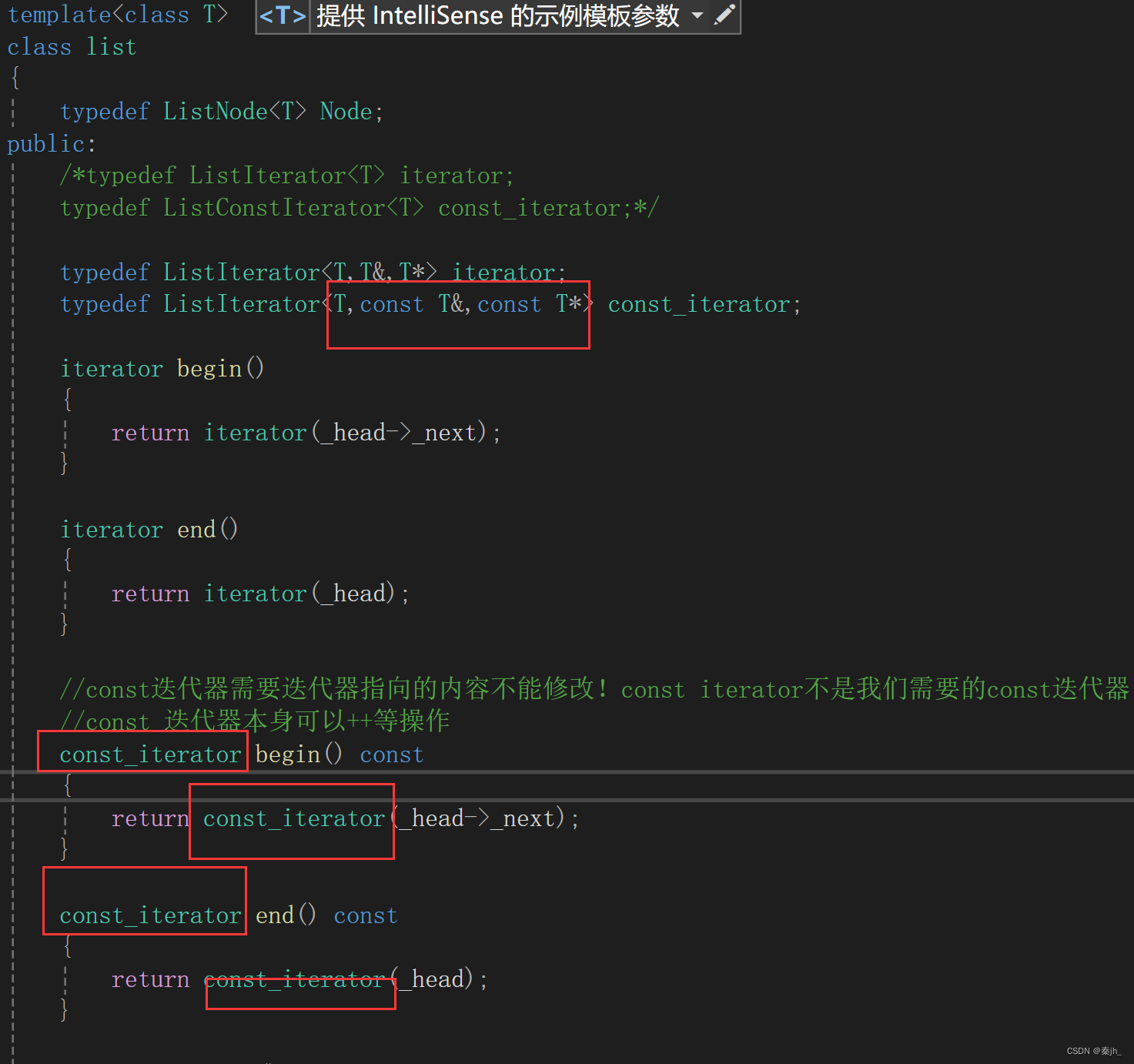
本质相当于写了一个类模板,编译器实例化生成了两个类。
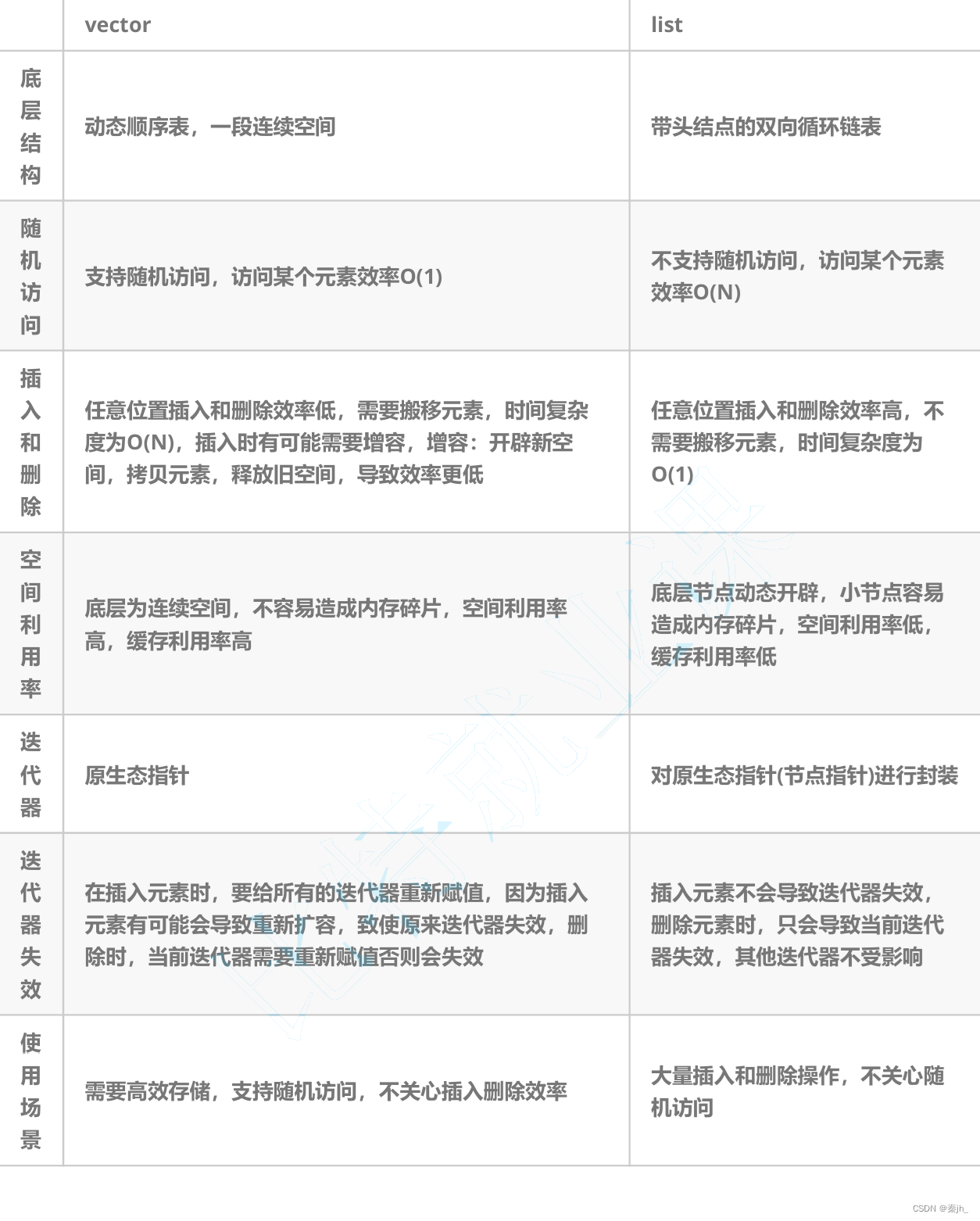
list与vector的对比
反向迭代器
反向迭代器的++就是正向迭代器的--,反向迭代器的--就是正向迭代器的++,因此反向迭代器的实现可以借助正向迭代器,即:反向迭代器内部可以包含一个正向迭代器,对正向迭代器的接口进行 包装即可。
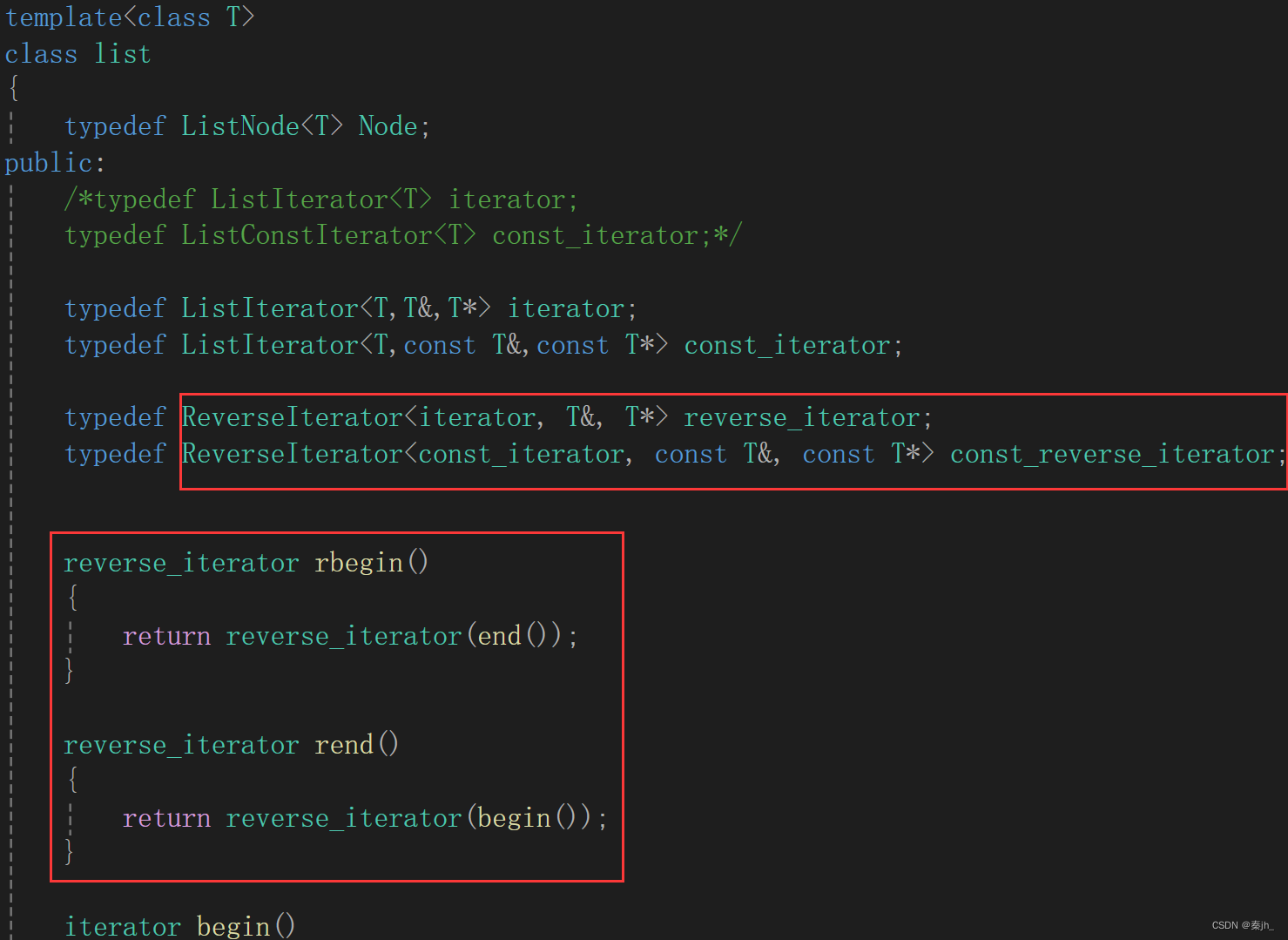
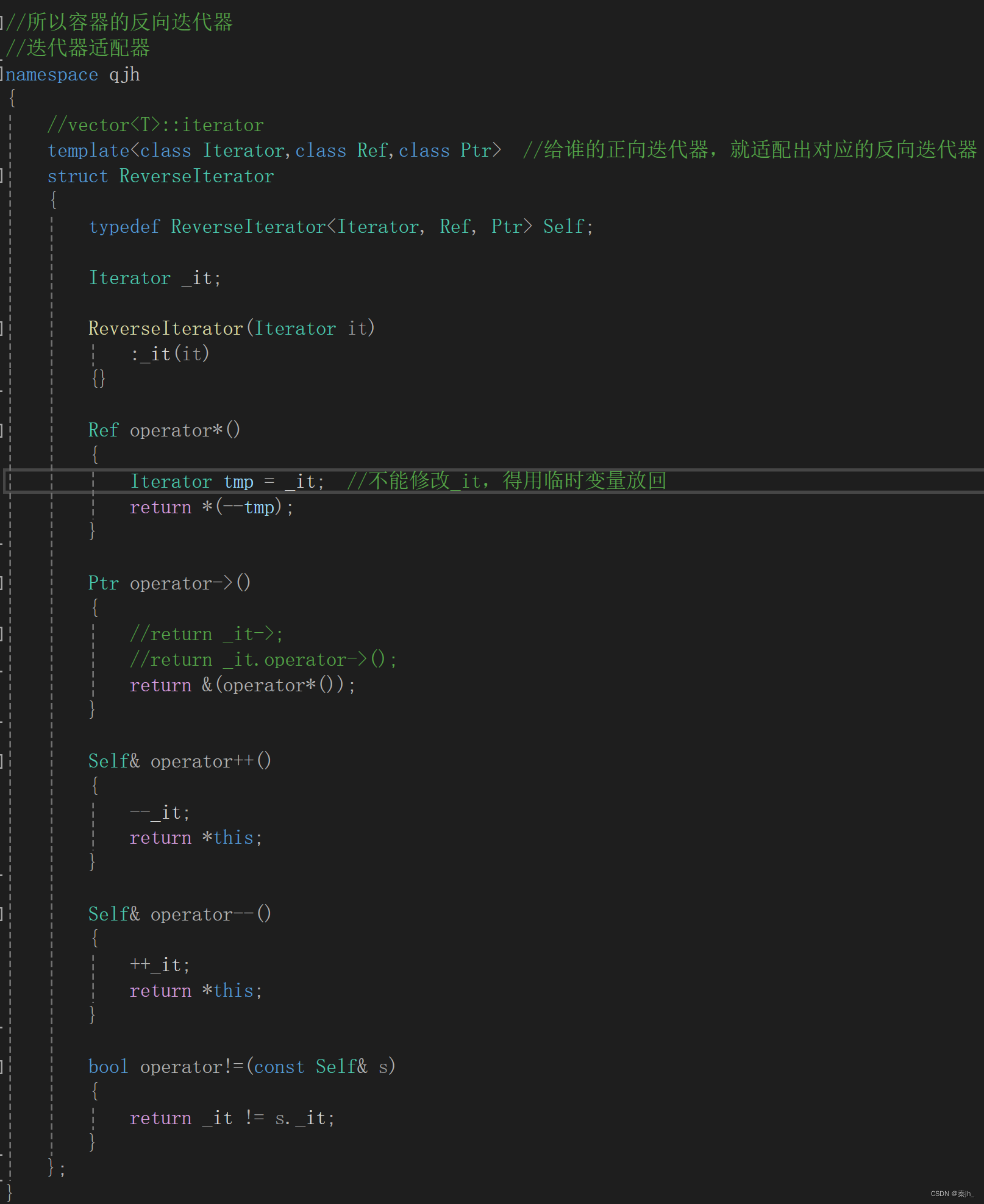
反向迭代器完整代码
#pragma once

//所以容器的反向迭代器
//迭代器适配器
namespace qjh
{
    //vector<T>::iterator
    template<class Iterator,class Ref,class Ptr>  //给谁的正向迭代器,就适配出对应的反向迭代器
    struct ReverseIterator
    {
        typedef ReverseIterator<Iterator, Ref, Ptr> Self;

        Iterator _it;

        ReverseIterator(Iterator it)
            :_it(it)
        {}

        Ref operator*()
        {
            Iterator tmp = _it;  //不能修改_it,得用临时变量放回
            return *(--tmp);
        }

        Ptr operator->()
        {
            //return _it->;
            //return _it.operator->();
            return &(operator*());
        }

        Self& operator++()
        {
            --_it;
            return *this;
        }

        Self& operator--()
        {
            ++_it;
            return *this;
        }

        bool operator!=(const Self& s)
        {
            return _it != s._it;
        }
    };
}
list完整代码
#pragma once
#include<assert.h>

#include"ReverseIterator.h"

namespace qjh
{
    template<class T>
    struct ListNode   //需要全部被公开,用struct
    {
        ListNode<T>* _next;
        ListNode<T>* _prev;
        T _data;

        ListNode(const T& x=T())
            :_next(nullptr)
            ,_prev(nullptr)
            ,_data(x)
        {}
    };

    template<class T,class Ref,class Ptr>
    struct ListIterator    //对指针进行封装,因为结点的空间不是连续的
    {
        typedef ListNode<T> Node;
        typedef ListIterator<T,Ref,Ptr> Self;

        Node* _node;

        ListIterator(Node* node)
            :_node(node)
        {}

        //*it
        //T& operator*()
        Ref operator*()
        {
            return _node->_data;
        }

        //T* operator->()
        Ptr operator->()
        {
            return    &_node->_data;
        }

        //++it
        Self& operator++()
        {
            _node = _node->_next;
            return *this;
        }

        //it++
        Self& operator++(int)
        {
            Self tmp(*this);
            _node = _node->_next;
            return tmp;
        }

        //--it
        Self& operator--()
        {
            _node = _node->_prev;
            return *this;
        }

        //it--
        Self& operator--(int)
        {
            Self tmp(*this);
            _node = _node->_prev;
            return tmp;
        }

        bool operator!=(const Self& it)
        {
            return _node != it._node;
        }

        bool operator==(const Self& it)
        {
            return _node == it._node;
        }
    };

    //template<class T>
    //struct ListConstIterator    //对指针进行封装,因为结点的空间不是连续的
    //{
    //    typedef ListNode<T> Node;
    //    typedef ListConstIterator<T> Self;

    //    Node* _node;

    //    ListConstIterator(Node* node)
    //        :_node(node)
    //    {}

    //    //*it
    //    const T& operator*()
    //    {
    //        return _node->_data;
    //    }

    //    const T* operator->()
    //    {
    //        return    &_node->_data;
    //    }

    //    //++it
    //    Self& operator++()
    //    {
    //        _node = _node->_next;
    //        return *this;
    //    }

    //    //it++
    //    Self& operator++(int)
    //    {
    //        Self tmp(*this);
    //        _node = _node->_next;
    //        return tmp;
    //    }

    //    //--it
    //    Self& operator--()
    //    {
    //        _node = _node->_prev;
    //        return *this;
    //    }

    //    //it--
    //    Self& operator--(int)
    //    {
    //        Self tmp(*this);
    //        _node = _node->_prev;
    //        return tmp;
    //    }

    //    bool operator!=(const Self& it)
    //    {
    //        return _node != it._node;
    //    }

    //    bool operator==(const Self& it)
    //    {
    //        return _node == it._node;
    //    }
    //};

    template<class T>
    class list
    {
        typedef ListNode<T> Node;
    public:
        /*typedef ListIterator<T> iterator;
        typedef ListConstIterator<T> const_iterator;*/

        typedef ListIterator<T,T&,T*> iterator;
        typedef ListIterator<T,const T&,const T*> const_iterator;

        typedef ReverseIterator<iterator, T&, T*> reverse_iterator;
        typedef ReverseIterator<const_iterator, const T&, const T*> const_reverse_iterator;

        reverse_iterator rbegin()
        {
            return reverse_iterator(end());
        }

        reverse_iterator rend()
        {
            return reverse_iterator(begin());
        }

        iterator begin()
        {
            return iterator(_head->_next);
        }

        iterator end()
        {
            return iterator(_head);
        }

        //const迭代器需要迭代器指向的内容不能修改!const iterator不是我们需要的const迭代器
        //const 迭代器本身可以++等操作
        const_iterator begin() const
        {
            return const_iterator(_head->_next);
        }

        const_iterator end() const
        {
            return const_iterator(_head);
        }

        void empty_init()
        {
            _head = new Node;
            _head->_next = _head;
            _head->_prev = _head;

            _size = 0;
        }

        list()
        {
            empty_init();
        }

        list(initializer_list<int> il)
        {
            empty_init();

            for (auto& e : il)
            {
                push_back(e);
            }
        }

        //lt2(lt1)
        list(const list<T>& lt)
        {
            empty_init();
            for (auto& e : lt)
            {
                push_back(e);
            }
        }

        void swap(list<T>& lt)
        {
            std::swap(_head, lt._head);
            std::swap(_size, lt._size);
        }

        //lt1=lt3
        list<T>& operator=(list<T> lt)
        {
            swap(lt);
            return *this;
        }

        void clear()
        {
            iterator it = begin();
            while (it != end())
            {
                it = erase(it);
            }
        }

        ~list()
        {
            clear();
            delete _head;
            _head = nullptr;
        }

        //void push_back(const T& x)
        //{
        //    Node* newnode = new Node(x);
        //    Node* tail = _head->_prev;

        //    tail->_next = newnode;
        //    newnode->_prev = tail;
        //    newnode->_next = _head;
        //    _head->_prev = newnode;
        //}

        void push_back(const T& x)
        {
            insert(end(), x);
        }

        void push_front(const T& x)
        {
            insert(begin(), x);
        }

        void pop_back()
        {
            erase(--end());//迭代器不能-1,只能用--
        }

        void pop_front()
        {
            erase(begin());
        }

        void insert(iterator pos, const T& val)
        {
            Node* cur = pos._node;
            Node* newnode = new Node(val);
            Node* prev = cur->_prev;

            prev->_next = newnode;
            newnode->_prev = prev;
            newnode->_next = cur;
            cur->_prev = newnode;
            _size++;
        }

        iterator erase(iterator pos) //节点失效了,需要返回下一个节点
        {
            Node* cur = pos._node;
            Node* prev = cur->_prev;
            Node* next = cur->_next;

            prev->_next = next;
            next->_prev = prev;
            delete cur;
            _size--;
            return iterator(next); //匿名对象
        }

        size_t size() const
        {
            return _size;
        }

        bool empty()
        {
            return _size == 0;
        }

    private:
        Node* _head;
        size_t _size;
    };

    void test_list1()
    {
        list<int> lt;
        lt.push_back(1);
        lt.push_back(2);
        lt.push_back(3);
        lt.push_back(4);
        lt.push_back(5);

        list<int>::iterator it = lt.begin();
        while (it != lt.end())
        {
            cout << *it << " ";
            ++it;
        }
        cout << endl;

        lt.push_front(10);
        lt.push_front(20);
        lt.push_front(30);

        for (auto e : lt)
        {
            cout << e << " ";
        }
        cout << endl;

        lt.pop_back();
        lt.pop_back();
        lt.pop_front();
        lt.pop_front();

        for (auto e : lt)
        {
            cout << e << " ";
        }
        cout << endl;

    }

    struct A
    {
        int _a1;
        int _a2;

        A(int a1 = 0, int a2 = 0)
            :_a1(a1)
            ,_a2(a2)
        {}
    };

    void test_list2()
    {
        list<A> lt;
        A aa1(1, 1);
        A aa2 = { 1, 1 };

        lt.push_back(aa1);
        lt.push_back(aa2);
        lt.push_back(A(2,2));
        lt.push_back({3,3});
        lt.push_back({4,4});

        list<A>::iterator it = lt.begin();
        while (it != lt.end())
        {
            //cout << (*it)._a1 << ":" << (*it)._a2 << endl;
            //cout << it->_a1 << ":" << it->_a2 << endl;    //如果要遍历自定义类型,就要重载->,编译器为了可读性,省略了一个->
            cout << it.operator->()->_a1 << ":" << it.operator->()->_a2 << endl;
            ++it;
        }
        cout << endl;
    }

    void PrintList(const list<int>& clt)
    {
        list<int>::const_iterator it = clt.begin();
        while (it != clt.end())
        {
            //*it += 10;

            cout << *it << " ";
            ++it;
        }
        cout << endl;
    }

    void test_list3()
    {
        list<int> lt;
        lt.push_back(1);
        lt.push_back(2);
        lt.push_back(3);
        lt.push_back(4);
        lt.push_back(5);

        PrintList(lt);

        list<int> lt1(lt);
        PrintList(lt1);

    }
}
本文转载自: https://blog.csdn.net/qinjh_/article/details/137724497
版权归原作者 秦jh_ 所有, 如有侵权,请联系我们删除。
版权归原作者 秦jh_ 所有, 如有侵权,请联系我们删除。